Crafted with Heart, Warmed by Time
While industrial assembly lines churn out uniformly “perfect” products, there exist pieces that carry the lingering warmth of fire and the faint imprints of artisans’ fingers—objects that gain unique weight as time passes. Hand-cast artifacts are just such “storytelling creations.” Born from molten metal and shaped by craftsmen’s hands, every grain of their texture holds a code of time, and every inch of their surface writes a story of unwavering craftsmanship.
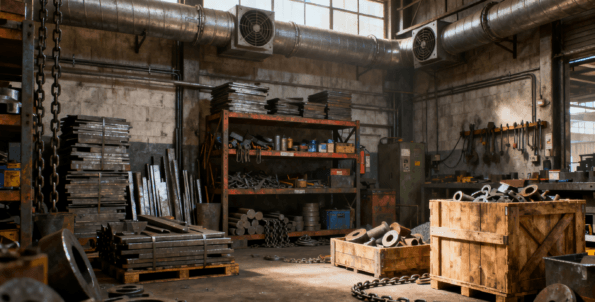
Step into a master craftsman’s workshop, and what catches your eye first isn’t the finished pieces on display, but the furnace that has accompanied the artisan for half a lifetime. As copper ingots shed their rigid form under intense heat, melting into glowing streams of golden-red liquid, the craftsman’s eyes light up—this is where creation begins, and where dialogue with age-old techniques commences. Unlike the cold precision of machine pouring, the hand-held ladling carries a subtle sense of balance. Guided by years of experience, the artisan’s arm moves in harmony, pouring the molten metal steadily into sand molds. The tiniest variations in speed, angle, and strength endow each final piece with an irreplaceable soul.
The sand mold is the artifact’s “first garment.” Every step—from sand selection and mixing to mold making and removal—demands meticulous care. Master craftsmen always say, “A sand mold must be as fine as tofu, yet as sturdy as stone.” They press the sand repeatedly with their fingers, sensing the density of the grains as if conversing with the earth itself. When the metal cools and solidifies, the mold is broken apart, and through the swirling dust, a rough casting emerges. It may bear tiny sand holes or uneven edges, but these “imperfections” are the badges of hand-casting—proof that it was never confined by rigid machinery.
The subsequent polishing and finishing is an even longer journey of dedication. Clutching sandpaper, the craftsman moves from coarse grinding to fine buffing, adjusting pressure from firm to gentle, as if smoothing out the wrinkles of time. A bronze mythical beast requires layered polishing to make its mane shimmer with light; a tin tea pet needs careful buffing to develop a mellow patina that deepens with tea stains over years. Sometimes, a small ornament undergoes hundreds of polishing passes—calluses on the artisan’s fingertips become the most reliable tool. They don’t chase “flawlessness”; instead, they preserve the natural textures formed during casting, for in their eyes, these marks are gifts of creation and unique signatures of handcraft.

Compared to the glossy smoothness of mass-produced goods, hand-cast artifacts exude a profound sense of depth. A bronze incense burner feels cool yet delicate to the touch; over time, traces of incense smoke leave unique patterns, forming a “time patina” that belongs solely to its owner. A cast-iron decor piece, treated with special antiquing techniques, bears rustic rust that feels nostalgic rather than shabby, as if it has traveled through eras. These pieces never go out of style, for they carry not just craftsmanship, but the emotional bond between people and objects.
On the display shelf in your living room, a hand-cast bronze crane stands tall, with traces of the craftsman’s hammer in its wing patterns. On your study desk, a tin paperweight lies gently, its warmth a reward from countless polishing hours. On your entryway console, a set of cast-iron candlesticks glows softly under candlelight, with tiny bubbles from casting making the light dance uniquely. These artifacts are no longer cold decorations—they are “time witnesses” in your life, accompanying you through days and nights, and holding the tender moments of everyday living.
Today, more and more people seek the warmth of handcrafted items, for they understand that the charm of hand-casting lies not in perfection, but in the “one-of-a-kind” uniqueness of each piece. From the flame of the furnace to the craftsmanship in artisans’ fingers, and finally to the warmth it brings to your home, hand-cast artifacts bridge millennia of techniques with modern life. The moment you touch them, you can feel the weight of time and the warmth of dedicated craftsmanship.
Add a hand-cast artifact to your life. Let it carry the artisan’s blessings and the warmth of time, becoming the most storytelling piece in your home—and let this millennium-old craftsmanship continue to thrive through the ages.