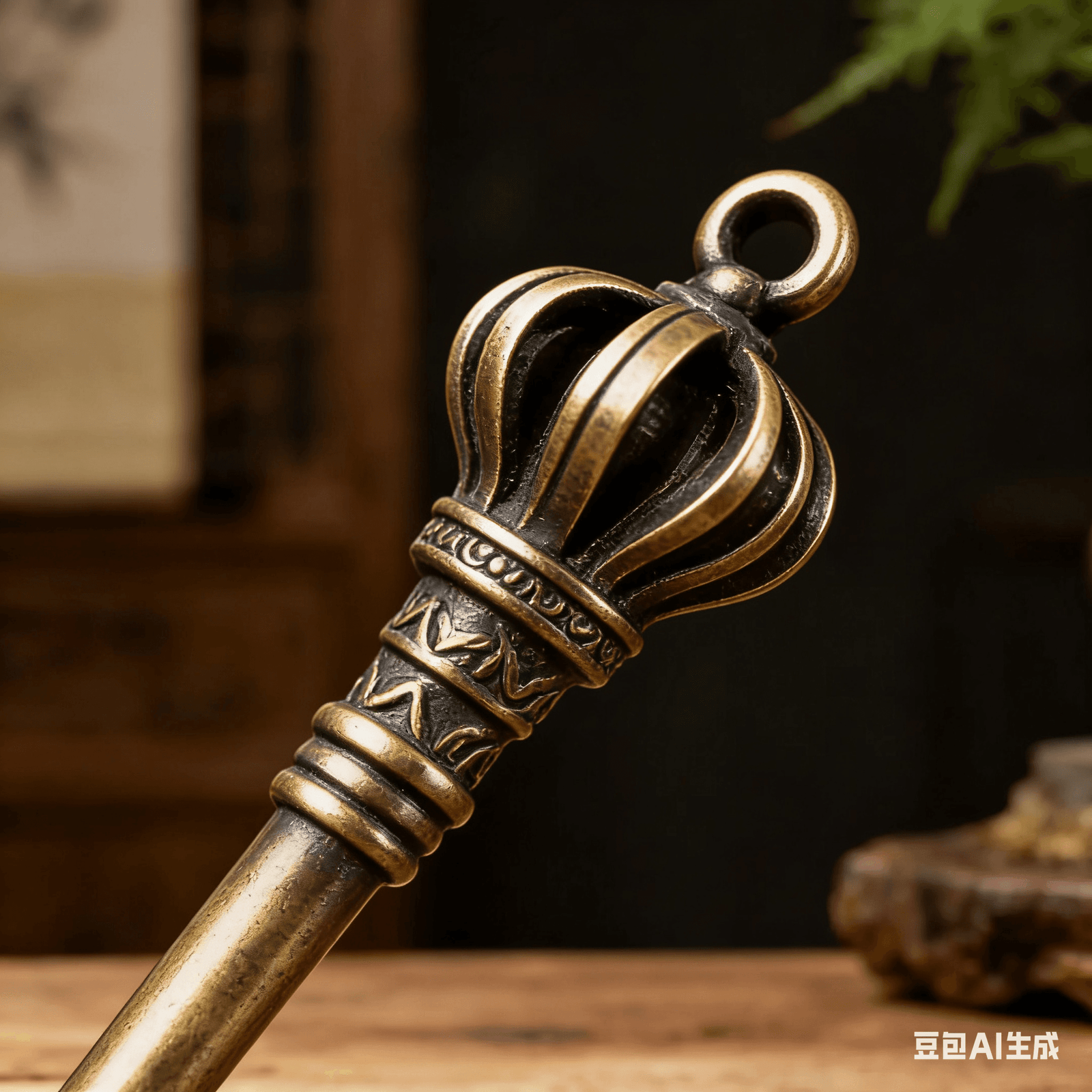
In the galaxy of human civilization, the Middle East has always been a region shining with unique brilliance. It is the birthplace of Mesopotamian civilization and a sacred land where religion and royal power intersect. The Middle Eastern scepter, as a concrete carrier of royal power and belief in this land, is a cultural relic spanning thousands of years, bearing unknown mysterious stories and profound heritage.
I. The Root of the Scepter: A Power Totem Nurtured in the Fertile Land of the Two Rivers
The origin of the Middle Eastern scepter can be traced back to the periods of the ancient Babylonian and Assyrian civilizations. Nourished by the Tigris and Euphrates Rivers, city-states rose and royal power emerged, and the scepter became the core symbol of a ruler’s identity and authority. Different from the symbols of royal power in other regions, the Middle Eastern scepter has had the dual attributes of “secular power” and “the will of the divine” since its birth.
In the reliefs of the Assyrian Empire, the scepters held by kings were often carved with patterns symbolizing the blessing of the gods—either winged bulls or sacred palm branches. These patterns were not mere decorations but a proclamation to the subjects of the authority of “royal power granted by the gods”. Beside the stele of Hammurabi’s Code in ancient Babylon, the king held a scepter while receiving authorization from the Sun God, a scene that also made the scepter a guardian of law and order.
Early Middle Eastern scepters were mostly made of bronze and gold, inlaid with precious gemstones such as lapis lazuli and carnelian. Craftsmen infused their reverence for the gods and respect for royal power into every carved pattern. A seemingly ordinary scepter might have witnessed the rise and fall of city-states, the change of dynasties, and might also have served as a medium connecting mortals and gods in religious rituals, completing countless solemn ceremonies.
II. The Beauty of the Scepter: The Integration of Craftsmanship and Art Across Civilizations
With the rise of the Persian Empire, the craftsmanship and design of Middle Eastern scepters reached their peak. Persian craftsmen absorbed the essence of craftsmanship from ancient Egypt and ancient Greece, turning Middle Eastern scepters into top-tier collections that combined practicality and artistry.
Scepters of this period often featured spiral patterns or animal-head designs at the handle, with lion heads and eagle heads being the most common elements—the lion symbolized the majesty of royal power, while the eagle represented the perspective of the gods. The body of the scepter would be adorned with intricate geometric patterns outlined using the filigree technique, then inlaid with turquoise and agate imported through long-distance trade, which shimmered with brilliant light under the sun.
It is worth noting that Middle Eastern scepters were not exclusive to the royal family. In some tribal civilizations, the scepters of elders were made of date palm wood, inlaid with shells and animal bones, symbolizing the wisdom and inheritance of the ethnic group; while the scepters of religious figures would be carved with scriptures and sacred images, serving as an extension of faith. Scepters of different materials and patterns together constitute the diverse cultural landscape of the Middle East.
III. The Charm of the Scepter: The Collectible and Inheritable Value Spanning Millennia
In today’s collection market, Middle Eastern scepters have long become “treasured items” pursued by cultural enthusiasts and collectors. Their value lies not only in the materials such as gold and gemstones but more importantly in the historical information and cultural codes they carry.
A gilded scepter from the Sassanian Dynasty may record the level of metallurgical technology at that time; a scepter head inlaid with patterns of Byzantine style might have witnessed the trade and exchange between Eastern and Western civilizations; and those ancient scepters preserved in tribes are living fossils for studying the nomadic civilizations of the Middle East.
For collectors, owning a Middle Eastern scepter is like holding a key to unlocking a millennium of civilization. It can be an artistic ornament in a study, telling the legends of ancient civilizations in quiet moments; it can also be a link for cultural exchange, allowing more people to appreciate the unique charm of Middle Eastern civilization through sharing and discussion.
From a symbol of royal power in Mesopotamian civilization to a cultural treasure today, the Middle Eastern scepter has spanned thousands of years and still shines with unique brilliance. It is not just an artifact, but an epitome of a civilization and an inheritance of faith. When your fingertips touch the ancient patterns on the scepter, you seem to hear the echoes from the distant past and feel the depth and romance of Middle Eastern civilization.